
FAQ
Have Questions?
1. Ensure the smooth operation of the wire drawing equipment: the wire drawing drums and wire guide pulleys should be smooth and flexible, and their runout tolerances should be strictly controlled. If it is found that the drum wheel or the guide wheel has worn grooves, it should be repaired in time.
2. Good lubrication conditions are an important condition to ensure the surface quality of the wire rod and prolong the life of the mold. Always check the lubrication indicators, remove the copper powder and impurities in the lubricating oil, so as not to pollute the equipment and mold holes. If the lubrication fails, it must be **Replace in time and clean the lubrication system.
3. Reasonable die matching is the key factor to ensure the surface quality of the wire, control the size to be accurate and consistent, reduce the wear of the drawing drum, and reduce the operating load of the equipment. For the sliding wire drawing machine, it is the first step to be familiar with the mechanical elongation of the equipment and reasonably select the sliding coefficient.
4. Select the die hole type according to the material of the drawn wire and the reduction rate of each drawing. Generally speaking, the harder the wire being drawn, the smaller the compression angle of the die and the longer the sizing area; and vice versa. The surface reduction rate of each wire drawing is also closely related to the compression angle of the corresponding mold, and the compression angle should be appropriately adjusted according to the surface reduction rate.
5.Maintenance of wire drawing dies:
Effective maintenance and repair of wire drawing dies are crucial to reducing costs.
Due to the vibration of the wire, in the compression zone of the wire drawing die, the area that first contacts the wire first produces some slight annular wear, and then continues to expand until the sizing area, resulting in a serious decline in the surface quality of the wire and an increase in the size of the wire. Severe wear will cause transverse cracks (mainly in the drawing process of soft wire) or longitudinal cracks (mainly in the drawing of hard wire), resulting in the die not being used but scrapped.
Therefore, it is necessary to scientifically formulate the maintenance specifications of the drawing die according to the type of the drawn wire and the characteristics of the drawing. Under normal circumstances, minor annular wear can be restored to use only by polishing, or slightly enlarged diameter can meet the requirements of wire drawing. Excessive wear will greatly reduce the number of mold repairs, or even scrap it, increasing the cost of wire drawing.
The quality factors of the wire drawing die itself lead to the rapid wear of the die
1. The inlay of the wire drawing die blank and the die steel sleeve is asymmetric, and the distribution of the inlaid carbide steel sleeve is uneven and there are gaps, which are easy to cause U-shaped cracks in the wire drawing process of the die.
2. During the laser drilling process of the diamond die blank, the sintering marks are not cleaned cleanly or the force is uneven, which will lead to pits in the die during the diamond drawing process.
3. Unreasonable die hole design, too small opening in the inlet lubrication area, and too long sizing belt will lead to poor lubrication during the drawing process, resulting in accelerated die wear and even cracking.
Improper use of factors in the drawing process leads to rapid wear of the die
1. The compression ratio of the drawing process surface is too large, which causes the mold to crack or break. Most of the cracks or fractures are caused by the release of internal stress. In any material structure, the existence of internal stress is inevitable. The internal stress generated when the wire is drawn can originally enhance the microcrystalline structure of the mold, but when the compression rate of the drawing surface is too large, it cannot be lubricated in time and the temperature rise will be too high. Part of the material on the surface of the mold is removed, and the stress on the microcrystalline structure is greatly increased, making it easier to crack or break.
2. The tensile axis of the wire rod is asymmetrical with the center line of the die hole, resulting in uneven stress on the wire rod and the wire drawing die, and the impact of mechanical vibration will also cause a high stress peak to the wire rod and the wire drawing die, both of which are Will accelerate the wear of the mold.
3. Factors such as uneven hardness of the wire due to uneven annealing are likely to cause premature fatigue loss of the diamond wire drawing die, resulting in annular grooves to accelerate the wear of the die hole.
4. The surface of the wire is rough, and the surface adheres to the oxide layer, sand or other impurities, which will cause the mold to wear out too quickly. When the wire passes through the die hole, the hard and brittle oxide layer and other adhering impurities will cause the wire drawing die hole to quickly wear and scratch the surface of the wire like abrasive.
5. Poor lubrication or metal debris impurities in the lubricating fluid cause mold wear. Poor lubrication will cause the surface temperature of the die hole to rise too fast during wire drawing, and the die grains will fall off, resulting in die damage. When the lubricating fluid is not clean, especially the metal chips that fall off during drawing, it is very easy to scratch the surface of the die hole and the surface of the wire.
Choose a diamond wire drawing die with good pass design From the perspective of the uniform deformation of the wire in the wire drawing die, it seems that the curved type is better than the straight type. This hole type is designed under the theoretical guidance of “smooth transition”. Area”, “lubrication area”, “work area”, “sizing area”, “sunrise area”, the junction of each part requires “chamfering”, smooth transition, grinding the entire hole shape into a large , The mold with the hole type of the solitary face with different curvatures is still applicable under the conditions of the drawing speed at that time. From the end of the 1970s to the early 1980s, with the increase of the wire drawing speed, the service life of the wire drawing die became a prominent problem. In order to meet the requirements of high-speed cable, T.Maxwall and E.G.Kennth of the United States put forward the “straight line” theory. The theory focuses on the lubrication and wear factors in the drawing process, and points out that the improved linear wire drawing die hole type should have the following characteristics:
(1) The longitudinal section lines of each part of the hole pattern must be straight, and the straight working cone surface has a small pulling force;
(2) The handover part of each part of the mold must be obvious, so that each part can fully play its own role, avoiding the reduction of the actual length of the sizing area by the transition angle;
(3) Extend the height of the entrance area and the working area, so that the wire enters the middle section of the working cone of the die hole, and use the wedge-shaped area formed by the entrance cone angle and the upper half of the working cone angle to establish a “wedge effect”, forming a denser wire surface. A firm lubricating film reduces wear and is suitable for high-speed drawing;
(4) The sizing area must be straight and of reasonable length. If the sizing area is too long, the friction force of the wire will increase, and the wire will easily cause diameter reduction or wire breakage after the wire is pulled out of the die hole. It will wear out very quickly.
After practical application, the wire-pulling die designed by the linear theory has a service life that is more than 3-5 times higher than that of the R-type wire-pulling die.
3. The installation and use of wire drawing machine equipment should be reasonable
(1) The installation foundation of the wire drawing machine needs to be very stable to avoid vibration;
(2) During installation, the drawing axis of the wire should be symmetrical with the center line of the die hole through debugging, so that the stress of the wire and the wire drawing die is uniform;
(3) Avoid frequent starting and stopping during the drawing process, because the friction caused by the tensile stress at the start of drawing is much larger than the friction during normal drawing, which will inevitably increase the wear of the mold.
4. The wire used for drawing should be pretreated
(1) Surface pretreatment: For the wire with dirty surface and many impurities, it must be cleaned and dried before drawing; Pull out after drying; for wires with peeling, pitting, heavy skin and other phenomena on the surface, they should be ground by a polishing machine before drawing;
(2) Heat treatment: For the wire with excessive hardness or uneven hardness, the hardness should be reduced by annealing or tempering first, and the wire should maintain good hardness uniformity before drawing.
5. Maintain a suitable drawing area reduction ratio
The diamond wire drawing die itself has the characteristics of hard and brittle. If it is used for drawing with a large area reduction rate, it is easy to cause the die to withstand the stress and be broken and scrapped. Therefore, the appropriate surface should be selected according to the mechanical properties of the wire. Draw at a shrinkage rate. The stainless steel wire is drawn with a diamond die, and the surface shrinkage rate of a single pass is generally not more than 20%.
6. Use lubricants with good lubricating properties
During the drawing process, the quality of the lubricant and whether the supply of lubricant is sufficient will affect the service life of the wire drawing die. Therefore, it is required that the lubricant oil base is stable, has good oxidation resistance, has excellent lubricity, cooling and cleaning properties, and always maintains a better lubricating state throughout the production process, so as to form a layer that can withstand high pressure without being damaged. The thin film reduces the friction in the working area and increases the service life of the mold.
During the use process, the condition of the lubricating oil should be continuously observed. If serious discoloration or metal powder in the lubricating oil is found, it should be replaced or filtered in time to avoid the lubricating performance of the lubricating oil being reduced due to oxidation, and at the same time to avoid the small falling off during the drawing process. Metal particles damage the mold.
7. Regular maintenance and grinding of diamond wire drawing dies
During the long-term use of the wire drawing die, the die wall is subjected to strong friction and scouring by the metal wire, which will inevitably cause wear and tear. It is common that annular grooves (dents) appear at the entrance of the wire in the working area. The appearance of the ring groove of the wire drawing die aggravates the wear of the die hole, because the small particles of the core material that are peeled off due to loosening on the ring groove are brought into the working area and the sizing area of the die hole by the metal wire, which play the role of abrasive, and enter The wire of the die hole aggravates the wear of the die hole like a grinding needle. If it is not replaced and repaired in time, the ring groove will continue to expand at an accelerated rate, making repair more difficult, and there may even be cracks in the deeper part of the ring groove, causing the mold to be completely broken and scrapped.
We know from experience that it is very economical and cost-effective to formulate a set of standard standards, strengthen daily maintenance, and frequently repair the mold. Once the mold has any slight wear, timely polishing will take a short time to restore the mold to its original polished state, and the mold hole size will not change significantly.
8. Summary
in order to prolong the service life of the wire drawing die, in addition to selecting the appropriate die material, designing a reasonable hole size, improving the manufacturing level of the wire drawing die, and making the surface finish of the die hole meet the technological requirements, it is also necessary to determine a reasonable path. The secondary compression rate improves the use conditions of the wire drawing die. Pay attention to the daily maintenance of the mold during use, wash and replace it frequently, and ensure good lubrication during the stretching process
Natural diamonds, commonly referred to as diamonds, are the hardest substances in nature. Has high wear resistance and thermal conductivity. When used for drawing tungsten molybdenum wire, it can improve the surface quality of the wire, improve the performance and dimensional accuracy of the wire. Mainly used for drawing fine wire and finished wire. However, its performance is very brittle, the impact resistance is poor, the hardness is anisotropic, and the drawing die is easy to wear unevenly.In addition, natural diamond material is scarce and expensive
Synthetic diamond, also known as polycrystalline diamond, is a polycrystalline diamond formed by non-directional polymerization of many single crystal particles. It has the characteristics of high strength, high hardness, strong impact resistance, uniform performance and good comprehensive performance. When drawing medium filaments, its service life is longer than that of diamond dies and cemented carbide dies, the wire size is stable, and the surface quality is good. However, synthetic polycrystalline diamond has coarse grains and is difficult to polish. The surface finish of drawn wire is not as good as that of natural diamond. By refining the grains, the polishing performance can be improved, and the natural diamond can be replaced by a medium-fine wire drawing die, thereby greatly reducing the cost and improving the product quality.
Synthetic diamond, also known as polycrystalline diamond, is a polycrystalline diamond formed by non-directional polymerization of many single crystal particles. It has the characteristics of high strength, high hardness, strong impact resistance, uniform performance and good comprehensive performance. When drawing medium filaments, its service life is longer than that of diamond dies and carbide dies, the wire size is stable, and the surface quality is good. However, synthetic polycrystalline diamond has coarse grains and is difficult to polish. The surface finish of drawn wire is not as good as that of natural diamond. By refining the grains, the polishing performance can be improved, and the natural diamond can be replaced by a medium-fine wire drawing die, thereby greatly reducing the cost and improving the product quality.
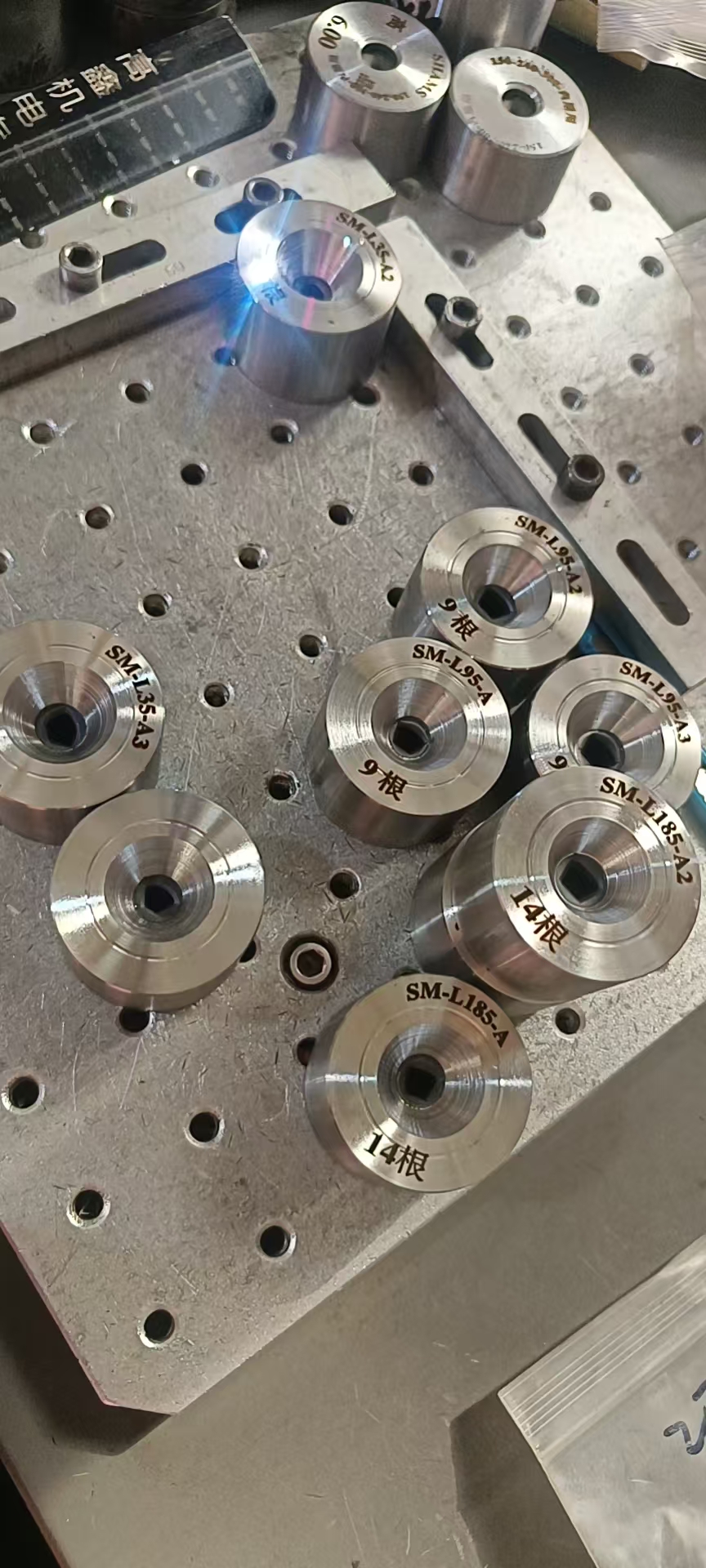
High hardness, good thermal conductivity and small friction coefficient; Low cost, used in some wire processing processes with high loss and high hardness; · Wear evenly during use; · Tungsten carbide core can withstand high temperature of 2800°C; The size range is 0.15mm-55mm (larger or smaller sizes are customized according to customer requirements); application: Tungsten steel molds are widely used in applications that require high temperature resistance, impact resistance and only short-term use.
Request a Quote Today
Reach Us
Location :
No.78 Tuhe New Street, Pengxing Town, Xiaonan District, Xiaogan City, Hubei Province, China
Email :
info@yjsdt.com
Tel/Fax :
+86 0712 2532850
